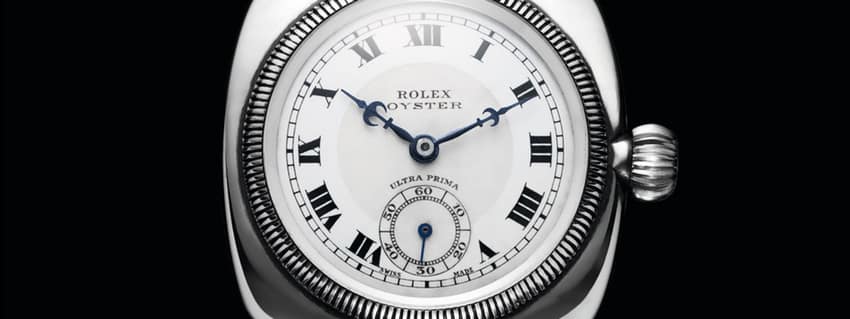
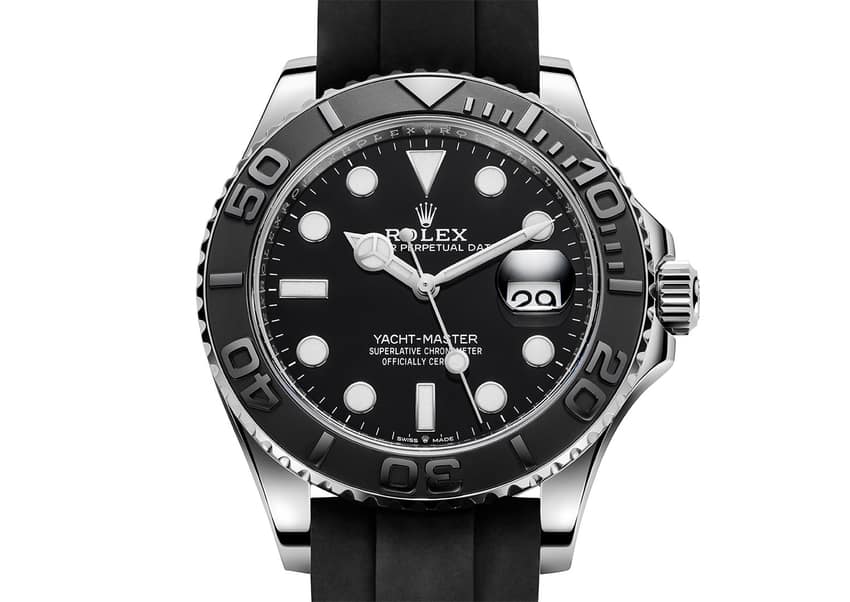
Before 2005, every Rolex sports bezel was anodised aluminium: it faded, it scratched, and replacing it was routine. Then Rolex introduced Cerachrom, and the entire economics of buying a used sports Rolex changed. Here is what it is and why it matters when you shop.
What Cerachrom is
Cerachrom is a sintered ceramic — zirconium oxide or alumina, depending on the colour — fired at extreme temperature into a monobloc insert. The numerals and graduations are moulded into the surface and then coated with a thin layer of gold or platinum by PVD, so the markings are metal in a ceramic recess rather than paint on top.
The result is a bezel that cannot fade in UV, cannot corrode, and is hard enough that it will not scratch in ordinary wear.
The two-colour problem, and how Rolex solved it
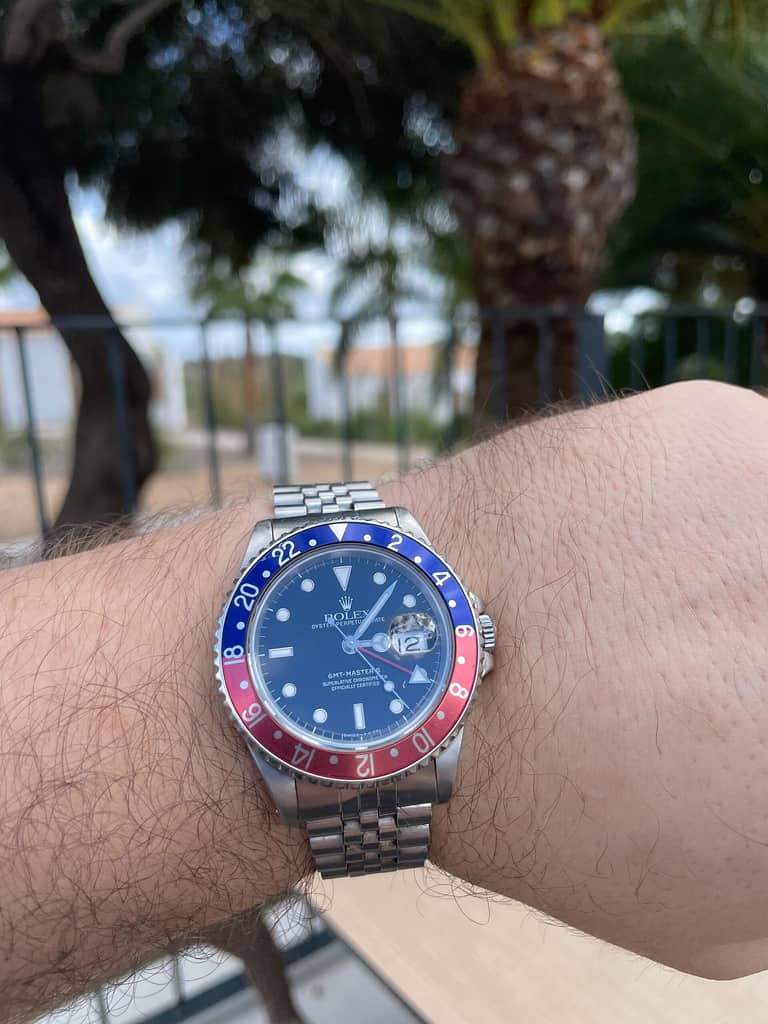
Making a single ceramic insert in two colours is genuinely difficult, which is why the Pepsi GMT went eight years without a ceramic version. Rolex's method: fire the whole insert in red, then chemically infuse half of it with a solution that turns blue during a second firing.
The first ceramic Pepsi was white gold only (116719BLRO, 2014). Steel arrived in 2018 with the 126710BLRO. Green-and-black Sprite and grey-and-black GRNR followed.
When each model got one
2005 — GMT-Master II 116718LN, in yellow gold. 2007 — Submariner Date 116618LB and the "maxi case" 116610LN in 2010. 2008 — Deepsea. 2011 — Daytona 116500LN's ceramic bezel arrived in 2016 after gold Daytonas got theirs in 2011. 2020 — Submariner 126610 and 41mm generation.
The practical takeaway: if a steel sports Rolex has a ceramic bezel it is from 2007 at the earliest, and usually later.
What it means for buying
Ceramic does not fade. So a "beautifully faded" ceramic bezel does not exist, and a listing that claims one is either mistaken or misleading. Fading belongs to aluminium.
Ceramic also chips. It is hard but brittle, and a sharp knock on a door frame can take a piece out of the edge. Inspect the bezel edge under angled light before you buy — a chip is not repairable and the insert must be replaced.
The case for aluminium
Aluminium bezels fade unevenly and beautifully. A 16610 Submariner whose insert has gone from black to slate grey, or a 16710 GMT whose Pepsi has faded to pink and pale blue, is a watch with a visible history that no modern watch can acquire.
That is why the last aluminium-bezel references have appreciated. You are buying something that will keep changing.
Which to choose
For a watch you will wear hard and want to look new in twenty years: ceramic. For a watch you want to develop character: aluminium, and accept that a knock leaves a mark.
Browse the collection
Browse ceramic and aluminium bezel references across the Submariner and GMT-Master II collections.
Frequently Asked Questions
No, and it does not need to be. A damaged one is replaced.
No. Any apparent fading is a lighting effect or a replaced insert.
On the same reference, an original unfaded or evenly faded aluminium insert commands a real premium.