The Explorer is the most under-appreciated watch Rolex makes. No date, no bezel, no complication, no colour — just a black dial, three luminous numerals and a case built to survive an expedition. Our 34 Explorers start at £5,600, and if you want a Rolex that does not announce itself, this is the one.
The Everest story, told accurately
Rolex supplied Oyster Perpetuals to the 1953 British Everest expedition, and Tenzing Norgay wore one. The Explorer name appeared shortly afterwards, and Rolex has traded on the association ever since. What matters for buyers is what the association produced: a watch engineered for legibility and shock resistance above all else.
The 3-6-9 dial with its Mercedes hands is one of the most legible designs in watchmaking, and it has barely changed in seventy years.
Reference 1016 — the vintage benchmark
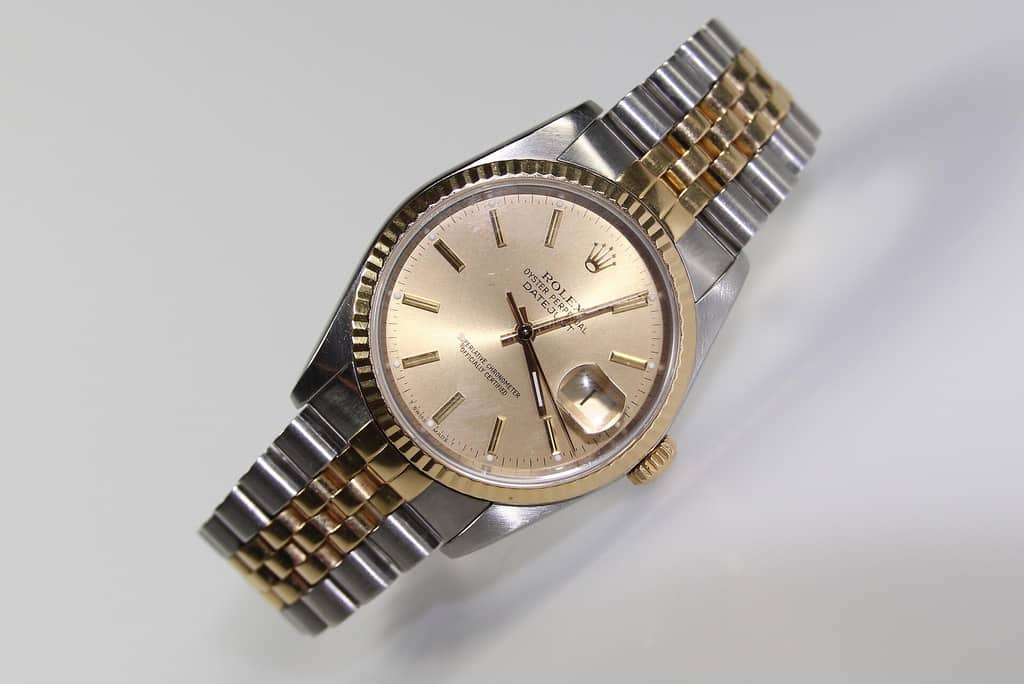
Produced from 1963 to 1989, the 1016 is a 36mm gilt- or matte-dialled Explorer that collectors have chased for thirty years. Early gilt examples are serious money; later matte-dial 1016s are more attainable but still command a premium over any modern Explorer.
Buy on dial and hands. Service dials and relumed hands halve the value of a vintage Explorer.
14270 and 114270 — the modern classics
The 14270 (1989–2001) brought a sapphire crystal and applied white-gold numeral surrounds. The 114270 (2001–2010) added solid end links and a better bracelet. Both are 36mm, both are superb, and both are among the best-value real Rolexes you can buy.
The 14270's earliest "blackout" dials — where the 3, 6 and 9 are painted black rather than white — are the ones to hunt.
214270 and 124270 — the 39mm and the return to 36
In 2010 Rolex enlarged the Explorer to 39mm with the 214270. Early examples had short handsets that looked undersized against the dial; Rolex corrected this in 2016, and the "Mark II" 214270 with longer hands and full-length numerals is the one to buy.
In 2021 the 124270 returned the Explorer to 36mm with the calibre 3230 and a 70-hour reserve. It is the best Explorer Rolex has made, and it sells accordingly.
What it costs and why it is good value
Our Explorers run £5,600 to £9,250 — a narrow band by Rolex standards, because there are no precious-metal versions to stretch the top end. That narrowness is a feature: the Explorer is one of very few Rolex models where almost every example is within reach.
Explorer or Explorer II?
They share a name and almost nothing else. The Explorer II is a 42mm watch with a 24-hour hand, a fixed bezel and a date, designed for cavers who cannot tell day from night. Our 68 Explorer IIs start at £6,350.
If you want small, clean and quiet, buy the Explorer. If you want a tool watch with a function, buy the Explorer II.
Browse the collection
Browse pre-owned Rolex Explorer stock from £5,600, or step up to the Explorer II from £6,350.
Frequently Asked Questions
That is the point of it. It is the Rolex for people who do not want to be asked about their watch.
No. The Explorer was 36mm for its first fifty years and looks correct on almost every wrist.
Steadily rather than spectacularly. The 1016 and early 14270 have appreciated significantly.