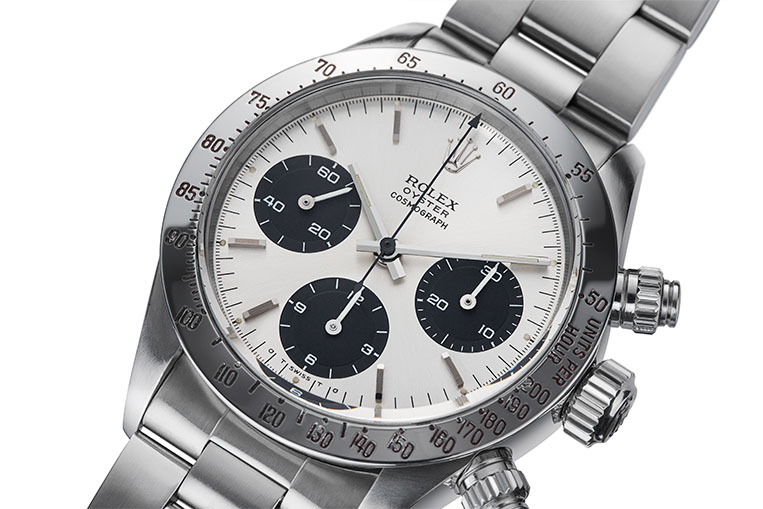
A Datejust rated to 100m is not a watch you should take to 100 metres. Depth ratings are static pressure tests performed in a laboratory on a new watch, and the number tells you less about what you can safely do than most people assume. Here is the practical version.
What the ratings actually mean
50m — splashes, handwashing. Not swimming. 100m — swimming and snorkelling on a watch with fresh gaskets. This covers the Datejust, Day-Date, Oyster Perpetual, Sky-Dweller and Yacht-Master. 300m — recreational scuba. Submariner, GMT-Master II (100m in fact — check the model), Explorer II. 1,220m — Sea-Dweller, saturation diving. 3,900m — Deepsea, which is beyond any human activity.
The number is a pressure the case survived when new and dry. It is not a promise about your forty-year-old watch.
Gaskets are the real variable
Water resistance depends on rubber O-rings at the caseback, the crystal and the crown tube. Rubber perishes with age, heat, chlorine, soap and sunlight, whether or not the watch goes near water.
A 300m Submariner with twenty-year-old gaskets is not a 300m watch. A 100m Datejust serviced last year is genuinely swimmable.
The crown is the weak point
Every Rolex has a screw-down crown — the Twinlock on dress models, the Triplock with an extra sealing zone on dive models. If the crown is not fully screwed down, the watch has no water resistance at all, regardless of its rating.
The single most common cause of water damage in a Rolex is a crown left unscrewed after setting the time.
Things that break water resistance
Hot showers and saunas — heat expands metal and rubber at different rates, and steam penetrates. Diving into water at speed — the impact pressure far exceeds the static depth. Chlorine and salt, which degrade gaskets and, unrinsed, corrode the bracelet.
And any impact hard enough to distort the case, which can be invisible from the outside.
Pressure testing
A pressure test costs very little and takes minutes. Any competent watchmaker can do it dry, without opening the watch. If you swim in your Rolex, have it tested annually.
Every watch we sell is pressure-tested to its rated depth before it is listed, with gaskets replaced where needed.
The practical rules
Screw the crown down every single time. Rinse in fresh water after the sea or a pool. Do not wear it in a hot shower or a sauna. Have the gaskets replaced at every service. Pressure test if it swims.
Do that and a 100m Datejust will handle everything you actually do.
Browse the collection
Every watch in the collection is pressure-tested before listing. Browse dive-rated models in the Submariner and Sea-Dweller collections.
Frequently Asked Questions
Yes, if the gaskets are sound and it has been pressure tested. Screw the crown down.
A cold one, probably. A hot one, no — heat and steam are what get in.
At every service, and every few years for a watch that regularly gets wet.